Seborrheic Keratoses Removal in Vancouver
Dr. Mona Khurana, founder of Shine MD, brings a strong procedural background shaped by her years in emergency medicine. Her precision, clinical acuity, and commitment to individualized care translate seamlessly into the evaluation and treatment of seborrheic keratoses.
At Shine MD, each patient receives a thorough physician-led assessment and a clearly defined treatment plan tailored to their skin type, lesion characteristics, and cosmetic goals. Our clinic is recognized as one of Vancouver’s leading aesthetic practices, offering expert seborrheic keratosis removal in a setting that prioritizes safety, efficiency, and refined cosmetic outcomes.
We have particular expertise in treating patients with skin of color, where we understand your specific needs.
What Are Seborrheic Keratoses?
Seborrheic keratoses are among the most common benign skin growths, particularly in adults over the age of 40. They often appear as waxy, scaly, or slightly raised lesions with a characteristic “stuck-on” appearance. Their color can range from light tan to dark brown or black.
These lesions can develop on the face, scalp, chest, back, and extremities. While they are entirely benign and non-contagious, they may become irritated due to friction or may be removed for cosmetic reasons.
Causes & Contributing Factors
The exact cause of seborrheic keratoses is not fully understood, but several contributing factors include:
- Aging
- Genetic predisposition
- Sun exposure
- Hormonal changes
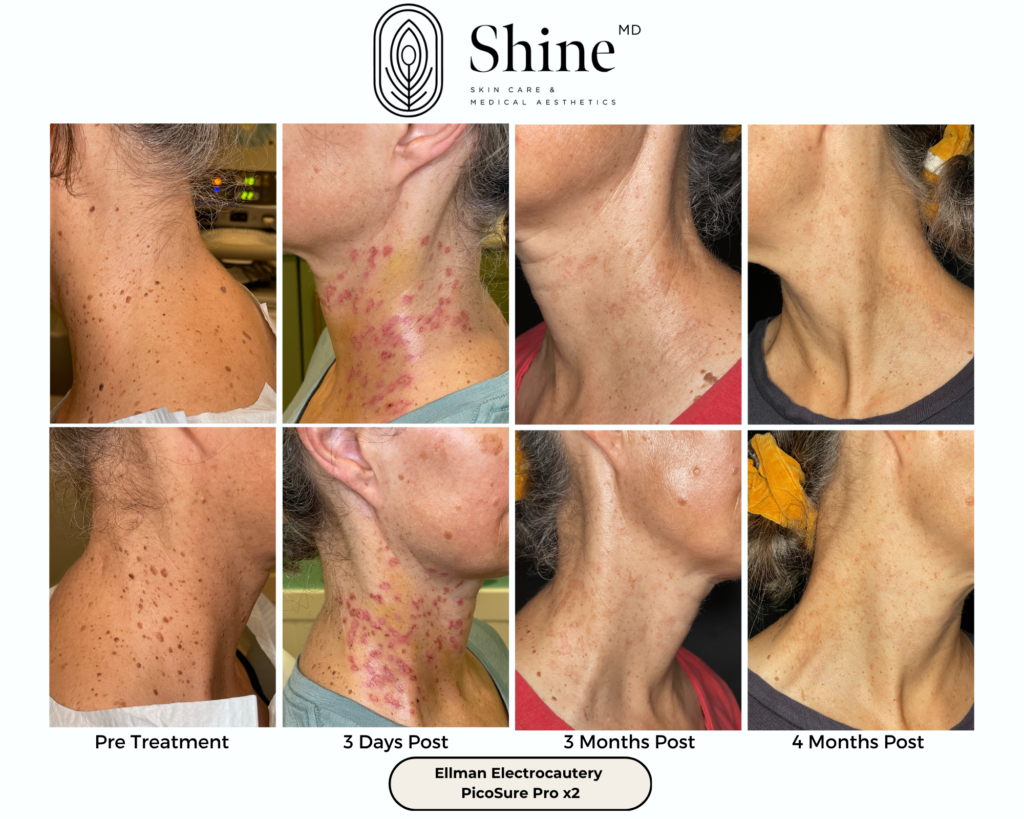
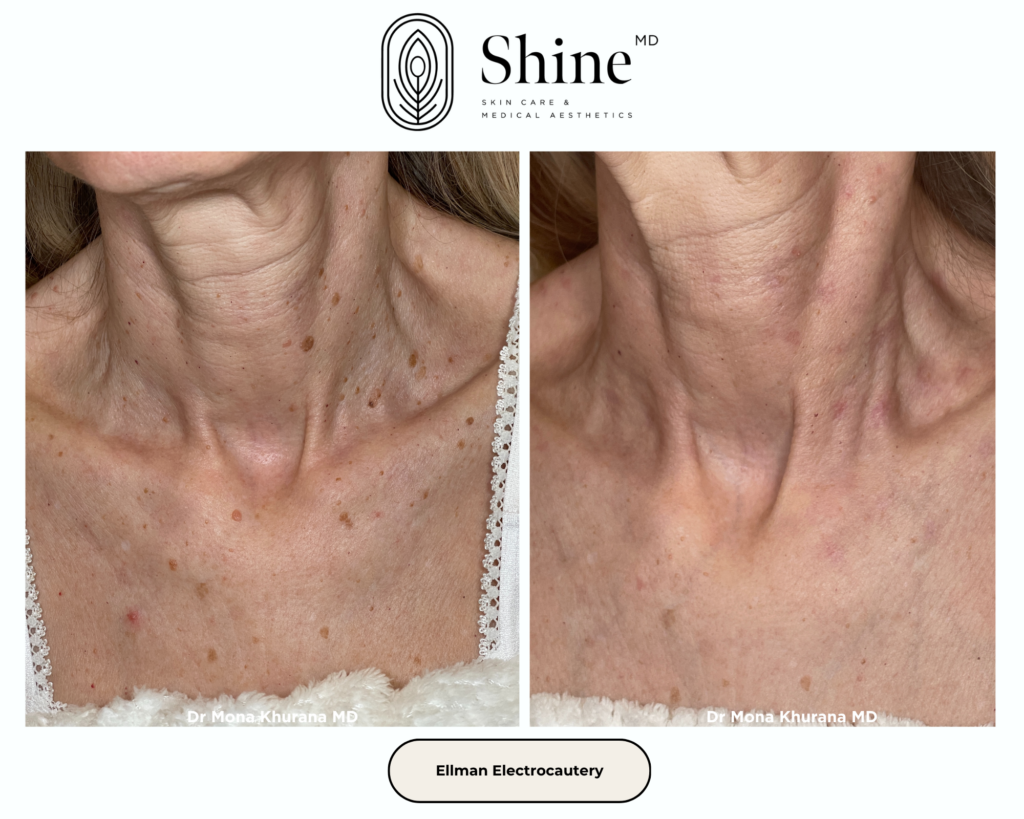
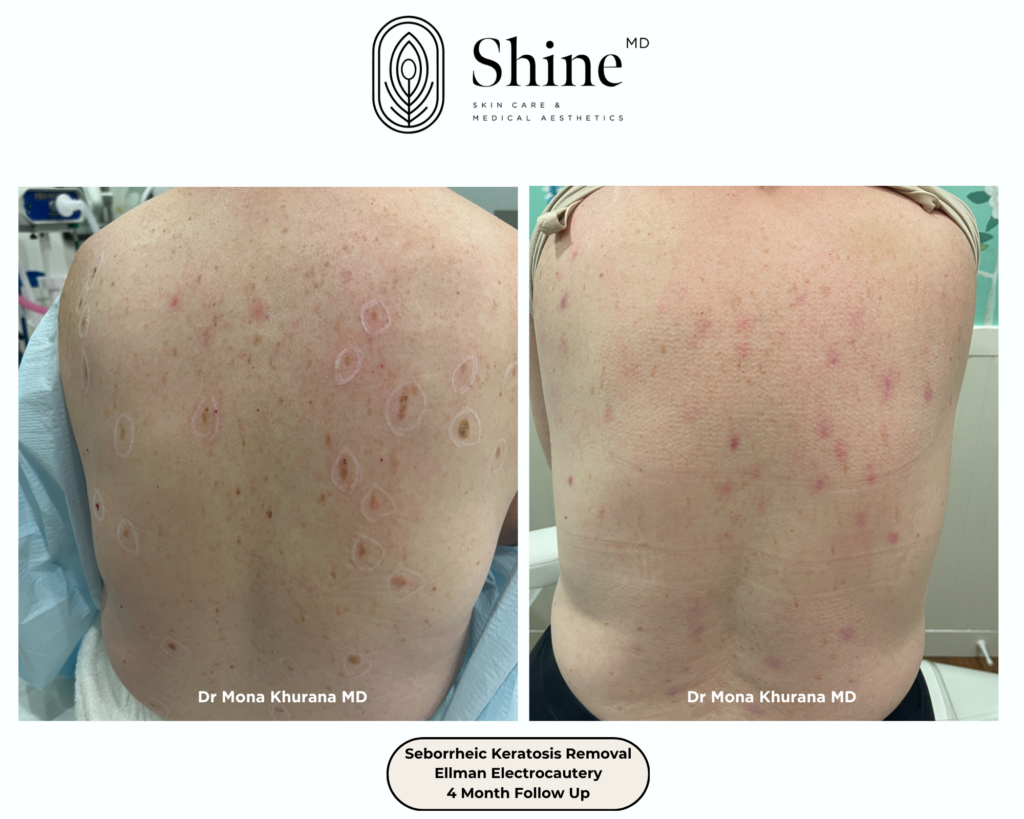
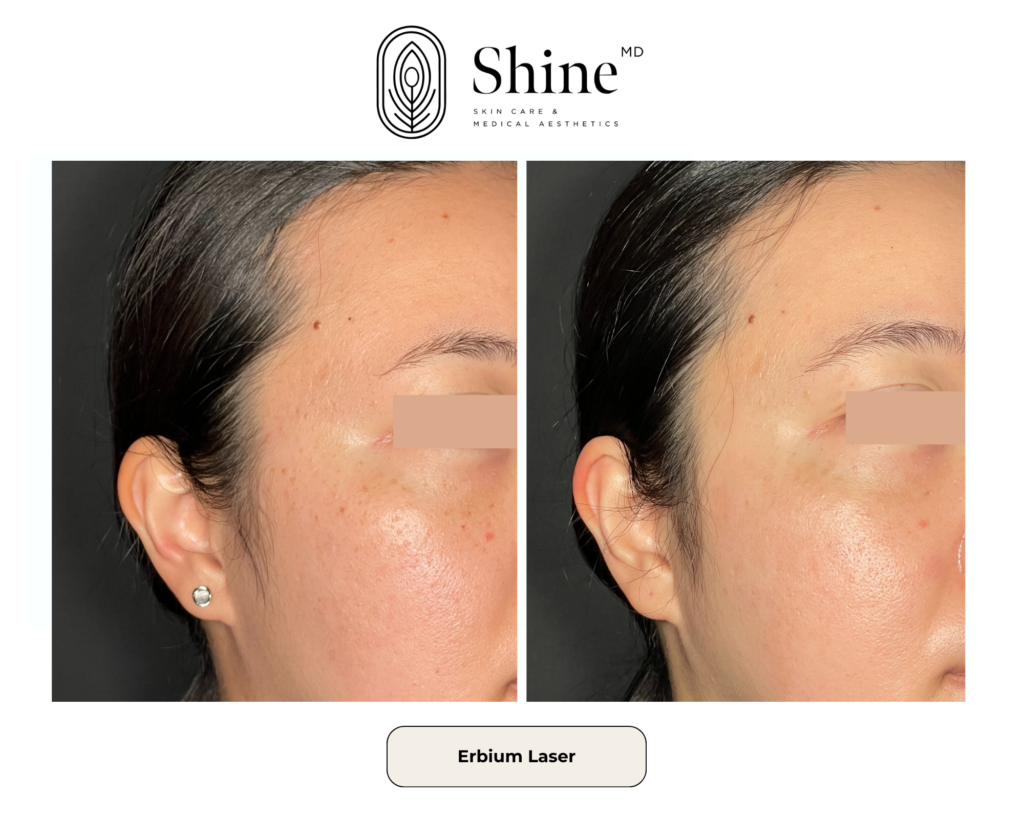
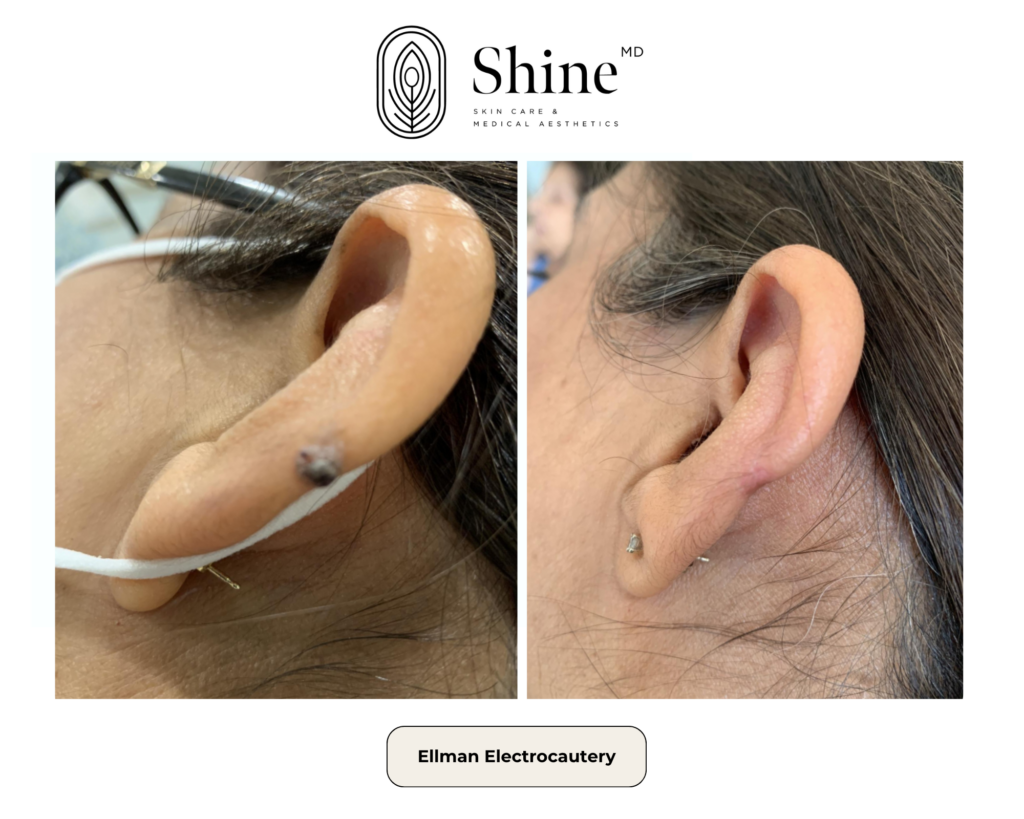
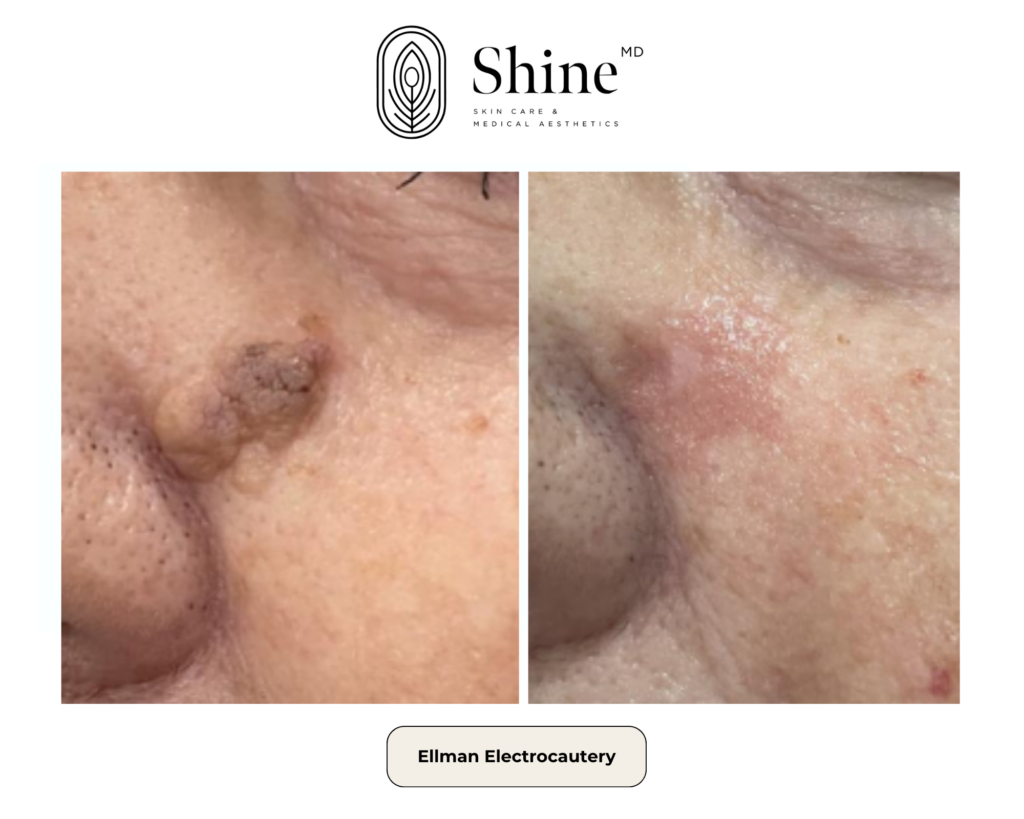
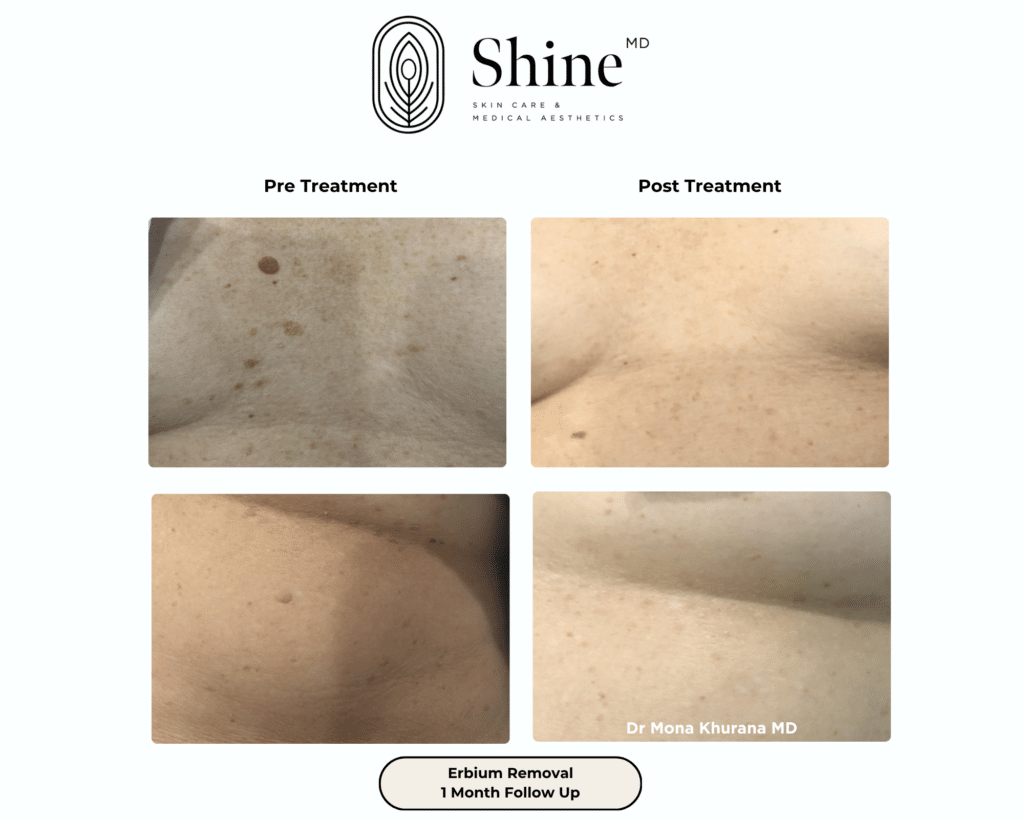
Types of Seborrheic Keratoses
Seborrheic keratoses can present in several forms:
- Flat or minimally raised lesions: Early lesions that may gradually thicken over time
- Thickened or verrucous lesions: More established growths with a rough, warty texture
- Pedunculated or irritated lesions: Lesions prone to friction or irritation
- Multiple lesions: Clusters across larger areas such as the face, chest, or back
Treatment Options For Seborrheic Keratosis
At ShineMD, the choice of treatment depends on the size, thickness, and appearance of the lesions, as well as your comfort preferences. Both liquid nitrogen (cryotherapy) and electrocautery are effective options that can be tailored to achieve smooth, clear skin with minimal downtime.
Liquid Nitrogen (Cryotherapy)
Liquid nitrogen treatment is a quick and effective way to remove seborrheic keratoses. The extremely cold temperature freezes the lesion, allowing it to gradually flake off over time.
Benefits:
- No injectable numbing is required
- Multiple lesions can be treated quickly in one session
- Generally less costly than electrocautery.
Considerations:
- The cold sensation can be temporarily uncomfortable
- Lesions may take several weeks to flake off and heal
- Skin can become dry or itchy during healing
- Larger growths may require multiple treatments for complete removal
- Hypopigmentation (lightening of the skin) can occur at the treatment site
Electrocautery
Electrocautery is an ideal treatment for larger, thicker, or raised lesions. This procedure uses controlled heat to precisely remove the growth.
Key Points:
- Injectable numbing is required for comfort
- Typically completed in a single treatment session
- Provides excellent cosmetic results with precise lesion removal
What to Expect During Your Procedure
Your seborrheic keratosis removal at Shine MD begins with a physician assessment to confirm the diagnosis and review your goals.
Before any treatment is performed, the area is numbed with a local anesthetic (lidocaine) to ensure a comfortable, pain-free experience.
If you are nervous about the procedure or have a fear of needles, the team will offer you Ativan and/or laughing gas. The physician will gently inject numbing in the area of treatment. Once the area is numb, the lesion will be removed with the electrocautery machine.
Following removal, a small superficial wound will be present at each treatment site. Aquaphor and a dressing will be applied to the sites. A protective scab forms over the next few days as the skin heals, then gradually resolves to reveal smooth, clear skin.
You will be given a post-care kit that includes skin care products, Aquaphor, dressings, and post-care instructions.
What is Recovery Like After Seborrheic Keratoses Removal
Recovery following skin tag removal is typically quick and straightforward. Most patients experience initial healing within 5–7 days, during which mild redness, slight swelling, or light scabbing at the treated areas is completely normal.
Your skin’s response during recovery will vary depending on your skin type, as well as the size, depth, and location of the treated lesion. It’s important to understand that temporary skin changes—such as redness or pigmentation—are expected side effects of the treatment, not complications.
If multiple or larger areas are treated, you may prefer to plan your schedule accordingly, as visible healing may impact social or professional activities for a short period.
What to Expect Based on Skin Type
- Darker skin tones: Temporary post-inflammatory hyperpigmentation (darkening of the treated area) may occur. This can be minimized with diligent sun protection, including sunscreen and sun avoidance. Targeted skincare and advanced laser treatments can help accelerate fading.
- Lighter skin tones: You may notice temporary redness or pink discoloration (post-inflammatory erythema) at the treatment site. This is a normal part of healing and gradually resolves over time. The improvement can be accelerated with Broad Band Light (BBL) laser or Aerolase treatments.
Supporting Optimal Healing
To enhance your recovery and achieve the best possible results, Dr. Khurana may recommend:
- Medical-grade skincare tailored to your skin type, specifically targeting pigmentation pathways
- Laser treatments such as BroadBand Light (BBL) or Aerolase to reduce redness or pigmentation
- Silicone gel sheets to support smooth healing and minimize discoloration
Long-Term Healing
While the surface of the skin heals quickly, deeper healing and collagen remodeling continue for up to one year after treatment. During this time, you’ll notice ongoing improvements in skin texture, tone, and overall appearance.
Before & After Care
Before Treatment
- Avoid sun exposure on the area to be treated in the weeks leading up to your appointment
- Inform your physician of any medications or medical conditions.
After Treatment
- Keep the treated area clean and follow all wound care instructions provided by your clinician
- Use recommended products, such as silicone gel sheets, to support healing and minimize redness or pigmentation
- Protect the treated area from UV exposure using a broad-spectrum sunscreen once the skin has healed.
Fees and Appointment Process
Seborrheic keratosis removal is performed for cosmetic reasons and is not covered by the Medical Services Plan of British Columbia (MSP).
The starting cost for removal of a single seborrheic keratosis is $500, with additional fees for extra lesions or larger treatment areas. For cases involving multiple growths, pricing will be determined after an in-person or photo assessment by our team.
How the Process Works
- Contact our clinic team through our online contact form or by emailing photos of your lesion(s) to info@shinemd.com.
- Please ensure images are:
- Clear, well-lit, and in focus
- You indicate whether each lesion is raised or flat
- You specify how many lesions you would like assessed or removed.
- Our team will review your photos and provide preliminary guidance.
- Whenever possible, we will schedule your consultation and treatment on the same day.
- Consultation fees: The consultation fee is $250, which is applied toward the cost of treatment if it is completed on the same day.
Most patients choose to have their consultation and lesion removal completed in a single visit. During your appointment, the physician will thoroughly assess your lesion, discuss treatment options, and perform the procedure with precision and care.
What This Means for You
At Shine MD, our goal extends beyond simply removing your seborrheic keratoses. We are committed to ensuring the best possible long-term cosmetic result for your skin, in a caring and safe environment.
Book a seborrheic keratosis removal consultation at our Vancouver clinic.
Frequently Asked Questions
Seborrheic keratoses are entirely benign and do not carry a risk of becoming cancerous. However, because they can occasionally resemble other lesions a physician’s assessment is important before any treatment is undertaken. At Shine MD, all lesions are evaluated clinically by a physician prior to removal.
If you are certain that the lesion is a seborrheic keratosis, then no referral is required to book a consultation at Shine MD. You may contact the clinic directly to arrange an assessment with Dr. Khurana. The clinic team will ask you to send photos of the areas to ensure that you can be booked in for an elective lesion removal appointment. On treatment day, your physician at Shine MD will assess your seborrheic keratoses, confirm the diagnosis, and recommend the most appropriate removal approach based on your individual presentation and skin type. Consult and removal fees apply. If a biopsy is clinically indicated, the associated pathology costs may be covered by the Medical Services Plan of British Columbia (MSP).
Seborrheic keratosis removal performed for cosmetic reasons is not covered by the Medical Services Plan of British Columbia. The starting cost of a single seborrheic keratosis is $500 with additional fees per lesion or area. For larger areas where multiple lesions are present, your pricing will be determined by our team members after an in person or photo assessment.
Multiple seborrheic keratoses can often be treated in a single session. Patients presenting with clusters or more widespread lesions across the face, neck, chest, or back are routinely treated in one visit. The number of lesions addressed is determined during your consultation, based on their size, location, and distribution.
Once a seborrheic keratosis has been fully removed, it does not typically recur in the same location. However, individuals who are predisposed to developing seborrheic keratoses may continue to develop new lesions over time. This reflects a natural tendency of the skin rather than a result of the treatment.
The risk of scarring is low when appropriate techniques are used. At Shine MD, methods such as electrocautery are selected to minimize trauma to surrounding tissue and support smooth healing. As outlined above, post-inflammatory skin changes such as redness or pigmentation are a common and expected part of the healing process. Permanent textural scarring is unlikely.
Yes. Shine MD has particular expertise in treating patients with skin of color. Post-inflammatory hyperpigmentation (darkening of the treated area) is a temporary known and expected response in most patients with skin of color. This occurs as the skin heals and is a response to the treatment energy. While this is not harmful, it may take time to fade.
We take specific precautions to minimize pigmentation changes and support optimal healing. For patients who want faster improvement, we also offer optional post-treatment skincare and laser therapies to help even out skin tone. These additional treatments are elective and not included in the initial lesion removal fee.
In the weeks leading up to your appointment, avoid sun exposure and tanning in the areas to be treated. Inform your physician of any medical conditions or medications. On the day of your procedure, arrive with clean skin, free of makeup, lotions, or heavy creams in the treatment area.
Recovery following seborrheic keratosis removal is typically quick and straightforward. Most patients experience initial healing within 5–7 days, during which mild redness, slight swelling, or light scabbing at the treated areas is completely normal.
The scab gradually resolves as the skin heals beneath. Temporary post-inflammatory changes—such as redness in lighter skin tones or darkening in patients with skin of color—are expected and typically improve over several weeks to months. Medical-grade skincare and, where appropriate, laser treatments may be used to support and accelerate resolution.
Keep the treated area clean and follow the wound care instructions provided by your clinician. Daily cleansing and the use of Aquaphor will improve your wound healing. Once the skin has fully healed, apply a broad-spectrum sunscreen to protect the area from UV exposure, to minimize post-inflammatory pigmentation. Avoid picking at or disturbing any scabs that form, as this can delay healing and increase the risk of scarring.
Most patients are able to return to their normal daily activities immediately or within 24 hours following treatment. Seborrheic keratosis removal involves minimal to no downtime, making it a convenient option for even the busiest schedules.
To support proper healing, we recommend avoiding swimming, hot tubs, and saunas in the days following your procedure until the skin is fully healed. It’s also important to minimize prolonged moisture, friction, or sweating—especially in areas where skin folds are present—to reduce irritation and promote optimal recovery.
You may experience mild tenderness or sensitivity at the treated sites for a few days. This is completely normal and typically resolves quickly as your skin heals.
While the initial healing period is typically up to seven days, the skin continues to remodel for up to one year following treatment. Most patients notice a significant improvement once the scab resolves, with continued refinement in texture, tone, and overall appearance over the following months.
Discover Our
Before & After Gallery
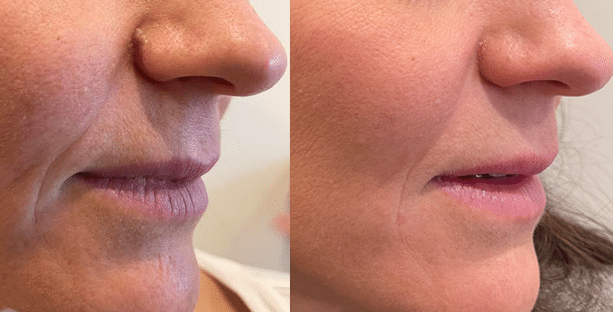
Want to see real patient results from our innovative skin treatments? View our impressive before and after images in our photo gallery.
*Individual results may vary.