Treatment for Skin of Colour in Vancouver
PHYSICIAN-LED, INCLUSIVE CARE
At Shine MD, we treat acne, acne scarring, pigmentation, melasma, and the signs of aging in skin of color safely, effectively, and with technology chosen specifically for melanin-rich skin. Melanin-rich skin responds differently to lasers, heat, and inflammation, and it deserves care designed around that from the start rather than adapted to it afterward. Every plan begins with a physician-led assessment in our Vancouver clinic.
A Practice Built for Skin of Colour
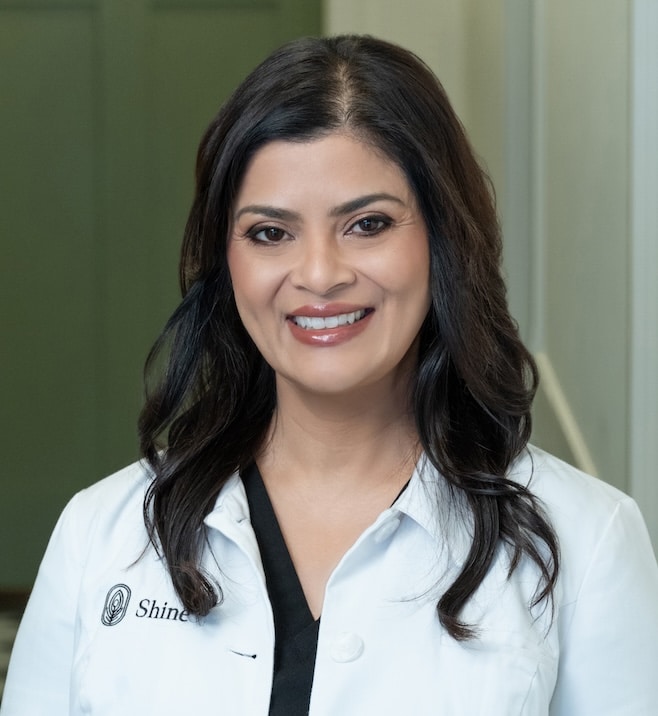
Led by Dr. Mona Khurana, MD – one of the first physicians in Canada to build a medical aesthetic practice explicitly around treating skin of color.
Shine MD is a physician-led medical skin care and aesthetics clinic in Vancouver, BC, and one of the first practices in Canada to make an explicit commitment to treating skin of color. Founded in 2020, we are leaders in our space and have become a destination practice for patients of colour seeking safe, credible, and authoritative care for their skin.
The clinical model at Shine MD was inspired by the lived experience of founder Dr. Mona Khurana, MD, as a woman of color. Embarking on her own skin care journey in Vancouver — one of the most ethnically diverse cities in Canada — she was met with a narrow menu of options and provider hesitancy, and felt marginalized as a patient. The gap in access and care was obvious, and she dedicated the next phase of her career to building better systems and access for skin of color patients.
Our work is meaningful and personal, designed to create a safe environment for all skin types while honouring the challenges and unique needs of patients with deeper skin tones.
Creating a New Industry Standard for Skin of Colour
Patients with skin of color are the global majority and among the fastest-growing groups seeking aesthetic care. Yet access to quality care for these patients is still not where it should be.
The explanation is rooted in history. Aesthetic devices and protocols have historically been developed and tested on lighter skin types, because lighter skin carries a lower risk of complications and is easier to study. There is now growing awareness of the unintentional bias that exists in dermatology and aesthetic medicine. Industry leaders are developing and validating technology that works effectively across the full range of skin types.
That progress is real — but whether it reaches patients depends on the clinical care team: on their dedication, and on their commitment to investing in the right devices and developing protocols that genuinely serve deeper skin tones.
At Shine MD, we are raising the standard of care for your skin — through accessibility, representation, and safety, delivered by a team committed to making sure your treatment plan is designed with confidence, just for you.
Why Skin of Colour Needs A Different Approach
What is Skin of Colour?
Skin of colour refers to skin with higher melanin content that responds differently to inflammation, heat, and injury. It spans a wide range of backgrounds, including South Asian, East and Southeast Asian, Black and African, Middle Eastern, Hispanic and Latin American, Indigenous, and mixed heritage.
What these skin types share is not a single tone but a common clinical consideration: how will this particular patient respond to the heat and energy delivered by an energy-based device?
Hesitation around energy-based treatment for diverse skin tones stems from this central clinical paradigm — and from the two things that determine whether a provider can answer it confidently: experience treating melanated skin, and access to the right technology and pre- and post-care protocols.
At Shine MD, we understand the variability between individual patients and skin tones. With our selection of laser devices and years of experience treating melanated skin, we are well equipped to build a treatment plan that is safe, low-risk, and designed to get you to your goals.
Built For You, Adaptive Protocols
Treatment plans are built around the variability between individual skin tones, patient history, and treatment goals. With multiple laser technologies and years of experience treating melanated skin, our goal is to create a plan that is thoughtful, safe, and designed to move you toward meaningful results.
Skin of Colour Is Clinically Diverse
Skin of colour includes a broad range of backgrounds and tones. What matters most in treatment is not just colour itself, but how each patient's skin is likely to react to inflammation, injury, and energy delivered by a device.
Clinical Confidence
Confidence in treating melanated skin comes down to one key consideration: how this individual skin type will respond to heat and energy. That is why provider judgment, device selection, and careful treatment planning matter so much.
Experience
Real experience treating melanated skin, and understanding how different tones can respond.
Technology
The right devices make a major difference when choosing settings and treatment options.
Protocols
Pre-care and post-care protocols reduce risk and support a safer treatment journey.
Concerns we treat in skin of colour
Patients with skin of colour come to us for the same reasons everyone else does. Anti-aging and positive aging. Skin texture and laxity. Pigmentation, redness, and acne. The goals are the same, and for most of what we do, so is the approach — assessment, skincare, medical management, and treatment planning don’t change because of skin tone or ethnicity.
The divergence in clinical decision-making comes when we consider including skin treatments and the application of energy-based devices in your treatment plan. This is where your skin needs particular attention and knowledge — where product selection, device choice, settings, pacing, and pre- and post-treatment care all have to be chosen deliberately to ensure safety and effectiveness for melanin-rich skin.
The Same Goals. One Point of Divergence.
Universal Goals
Patients with skin of colour come to us for the same reasons everyone else does. Assessment, skin care and medical management are designed to meet your needs.
Phototype-Based Clinical Decision-Making
Protocols and Treatment Plans Specific to Your Skin Concerns and Goals
Clinical decision-making diverges when skin treatments and energy-based devices enter the plan. Each of these must be chosen deliberately to ensure safety and effectiveness for melanin-rich skin.
Facial Rejuvenation and Positive Aging in Skin of Color
Melanin-rich skin ages differently. Greater intrinsic photoprotection means fine lines and sun damage often appear later and less prominently, and patients frequently arrive with skin that looks younger than their years. What tends to show up instead is volume loss and laxity along the midface and jawline, uneven tone, and pigmentation that has accumulated quietly over decades.
This changes what a rejuvenation plan should prioritize. Aggressive resurfacing aimed at fine lines is often the wrong starting point — the higher-yield work is usually in tone, texture, structural support, and collagen stimulation.
Treatments like radiofrequency microneedling, biostimulators, injectables, and pigment-focused protocols tend to deliver more for these patients than the resurfacing-first approach that suits lighter skin. The goal is skin that looks rested, even, and like itself, at every stage.
Acne and Acne Scarring in Skin of Color
Acne affects patients of every skin tone, and the acne itself is treated much the same way regardless of skin type. What differs is what it leaves behind. The majority of patients with skin of colour develop post-inflammatory hyperpigmentation after acne — dark marks that persist long after the breakout has resolved, and that are often more aesthetically impactful, and more difficult to live with, than the acne ever was.
It is also highly treatable. Clearing long-standing PIH can be genuinely life-changing for a patient who has carried it for years — but it requires the right combination of medical management, targeted skincare, energy-based treatment, and a team that understands how to sequence them.
Treating the pigment while the acne is still active means new marks form as fast as old ones fade, which is why the Shine MD team will always ensure you have access to medical management of your acne as part of treating the pigment it leaves behind. The same principle applies to acne scarring, where texture and pigment usually need to be addressed together.
Conditions More Common in Skin of Colour
When it comes to the unique needs of skin of colour populations, we know there are specific conditions that occur more commonly:
- Post-inflammatory hyperpigmentation (PIH) — the darkening and uneven tone left behind after acne, injury, or inflammation. More likely to occur, more persistent, and often more distressing than the original concern.
- Melasma — a chronic pigmentary condition that behaves differently from other pigmentation and requires its own approach. Treated through our dedicated Melasma Clinic.
- Dermatosis papulosa nigra (DPN) — the small raised papules common in Black and South Asian skin, removed with precision and minimal downtime.
- Keloid and hypertrophic scarring — raised scars that form more readily in melanin-rich skin, managed both medically and procedurally.
- Pseudofolliculitis barbae and acne keloidalis nuchae — razor bumps at the beard and neck, and firm papules at the posterior hairline, both more common with textured hair.
How Shine MD Assesses Your Skin
Every treatment plan begins during a consultation with a history and assessment. Two patients with the same skin tone can need very different plans, so your goals, skin assessment and skin type drive our recommendations. You can choose to have a consultation with a Medical Aesthetics Treatment Provider or with a physician.
We consider:
- Your skin care concerns and goals
- How your skin has historically responded to inflammation and injury — including any previous post-inflammatory hyperpigmentation, how long it took to fade, and whether it resolved fully
- Whether melasma is present, and whether pigmentation is mixed — this changes the approach significantly
- Your medical history and current medications, including isotretinoin
- Previous treatments and how your skin responded to them
- Your tolerance for downtime, and how treatment fits your life and budget
Our Treatment Approach for Skin of Colour
Treatment at Shine MD combines four things: extensive patient counselling, technology selected for melanin-rich skin, supportive skincare, and disciplined pre- and post-treatment care.
- Aerolase (Nd:YAG 1064 nm) — gentle enough to use across all skin tones, year-round, for active acne, redness, and pigmentation. Safe during isotretinoin.
- PicoSure Pro and Moxi — for stubborn pigment and overall tone, with controlled energy delivery suited to deeper skin.
- Halo — for pigment, texture, and scarring, with settings modified specifically for skin of colour.
- Microneedling (SkinPen) — collagen induction without heat or light, which makes it one of the most predictable options for texture and scarring in melanin-rich skin, and a useful starting point where a gentler approach is appropriate.
- Radiofrequency microneedling (Potenza, Morpheus8) — targeted, controlled energy delivery that makes it well suited to deeper tones.
- Quantum RF — powerful skin tightening for laxity along the jawline, neck, and midface. Radiofrequency energy bypasses melanin entirely, which makes it one of the safest and most effective options for tightening in deeper skin tones.
- Subcision with PRP, and biostimulation with Sculptra — a layered approach to textural acne scarring. Subcision with PRP is the foundation of every scarring plan we build, layered with resurfacing or RF microneedling depending on scar type and skin response.
- Chemical peels and medical-grade skincare — including tyrosinase inhibitors such as hydroquinone, azelaic acid, cysteamine, and kojic acid.
- Lesion removal — physician-performed removal of skin tags, moles, seborrheic keratoses, and DPN, using precise techniques chosen to minimize pigment change and textural scarring in deeper skin tones.
Skincare for pigmentation includes aggressive sun avoidance and sun protection, coupled with medical-grade skincare designed to block pigment production pathways. This is an essential component of treating pigmentation and melasma, and it works alongside your treatments rather than after them — beginning before your first session and continuing throughout.
For moderate-to-severe acne scarring, some patients choose more aggressive resurfacing to accelerate their results. In these cases — always discussed and consented to in advance — a controlled degree of post-inflammatory hyperpigmentation can follow.
This is treatment-induced PIH: an expected, temporary consequence of the energy delivered, and a distinct thing from a complication. It is a trade-off some patients deliberately choose, accepting a period of pigment in exchange for faster, greater improvement in their scarring. We plan for it, we know how to clear it, and it is a routine part of the work here rather than a cause for alarm. It is treatable and reversible with the right combination of care over time.
Test patches are done on an as-needed basis, where your history or the treatment being considered makes it useful.
Why Choose Shine MD for Skin of Colour Treatment
Why You Should Choose Shine MD for Your Skin of Colour Treatment
Effective treatment for melanin-rich skin depends on more than access to a laser. It requires the right clinical framework, technology, medical oversight, and honest decision-making from the beginning.
Skin of Colour Is Part of the Foundation
Device selection, treatment protocols, and assessment are designed around the needs and response patterns of melanin-rich skin.
Physician-Led Care
The physicians at Shine MD bring skin care focused training together with medical and aesthetic management, allowing concerns such as acne, pigmentation, scarring, and treatment planning to be considered in one clinical picture.
Integrated Treatment
Medical management, skincare, and energy-based treatments are considered together, so each part of the plan supports the others instead of functioning as isolated services. Experienced treatment providers add another layer of safety for your skin.
Honest Counselling
Treatment recommendations are based on what is appropriate for your skin and goals. That also means being willing to say when a device, procedure, or level of aggressiveness is not the right choice.
A treatment plan should be designed for you.
A broad device platform means recommendations are tailored to your skin.
From Patient to Practice
Real Results in Skin of Colour
- A practice built around skin of colour, not adapted to it — the devices, the protocols, and the assessment process were chosen for melanin-rich skin from the start.
- Physician-led throughout — Dr. Khurana holds a Postgraduate Diploma in Practical Dermatology with Distinction and combines medical and aesthetic management in one plan, including MSP-covered acne care where eligible.
- Integrated care — medical management, energy-based treatment, and skincare planned together rather than sold separately.
- Honest counselling — no hype, no pressure, and a clear answer when a treatment isn’t right for your skin.
Discover Our
Before & After Gallery
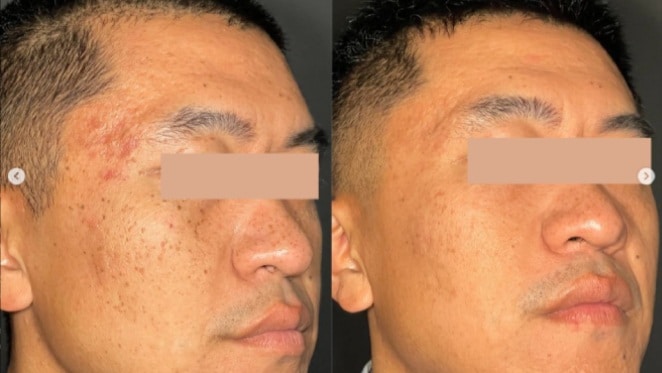
Want to see real patient results from our innovative skin treatments? View our impressive before and after images in our photo gallery.
*Individual results may vary.
Frequently Asked Questions
Is laser treatment safe for skin of color?
Yes — with the right device, settings, and expertise. Some lasers, such as the Nd:YAG-based Aerolase, can be used safely across all skin types. The key is choosing technology and settings that match your goals and are appropriate for skin of color.
What is post-inflammatory hyperpigmentation (PIH)
PIH is the pigmentation and uneven skin tone left after skin inflammation such as acne. It’s more common and longer-lasting in deeper skin tones — affecting the majority of patients with darker skin who have acne. PIH is reversible with the right combination of skincare, sun protection, and laser treatment.
What is the difference between PIH and PIE?
Both are marks left behind after acne, but they are different problems. PIH is brown or grey-brown and is caused by excess melanin. PIE — post-inflammatory erythema — is pink or red and is caused by residual damage to small blood vessels, not pigment. They require different treatments and often coexist in the same patient, which is why identifying which you have, or whether you have both, changes the plan.
Can you treat acne scars in skin of color safely?
Yes. Textural scars respond to layered, physician-led treatment such as subcision with PRP followed by resurfacing, with devices and settings chosen specifically to deliver safe treatments to your skin.
Will treatment make my pigmentation worse?
Careful device and setting selection is specifically designed to prevent unwanted pigmentation, and supportive skincare, sun protection, and (where appropriate) a test patch further reduce that risk. In some cases of moderate-to-severe scarring, patients choose more aggressive resurfacing to achieve greater improvement — and there, a controlled degree of post-inflammatory hyperpigmentation can sometimes occur as an expected, temporary side effect rather than a complication.
It’s discussed and consented to in advance, and it’s treatable and reversible with the right combination of care over time.
Some patients with skin of color have mixed pigmentation — both post-inflammatory hyperpigmentation and melasma at once. In these cases, improving the PIH (or using certain laser devices) can sometimes make the underlying melasma appear more noticeable.
This is why a careful diagnosis and a plan that accounts for every source of pigmentation matters — and why we may treat melasma alongside or before other concerns.
Is treatment-induced pigmentation the same as a complication?
No. Treatment-induced PIH is an expected, temporary response to the energy delivered — most often after deliberately aggressive resurfacing chosen to accelerate results in acne scarring. It is planned for, discussed and consented to in advance, and resolves with the right aftercare. A device-induced complication is different: it results from an inappropriate device, setting, or technique for that patient’s skin, and it is what careful device selection exists to prevent.
Why is skincare part of my treatment plan?
Because in melanin-rich skin, blocking the pigment pathway is what protects the result. Aggressive sun avoidance, daily sun protection, and medical-grade skincare designed to interrupt pigment production work alongside your treatments — starting before your first session and continuing throughout.
Do I have to wait six months after Accutane for laser treatment?
Absolutely not. In 2017, the American Society for Dermatologic Surgery published a consensus statement establishing the safety of combining nonablative lasers and energy devices with isotretinoin. At Shine MD, we’ve advanced our practice to move forward with high-impact treatment plans without unnecessary delay — confidently and safely using Aerolase, microneedling, radiofrequency microneedling, Moxi, Halo, and PicoSure Pro in patients on isotretinoin.
How many sessions will I need?
It varies by concern. Pigment and redness may improve over three to six sessions depending on the severity of the pigment; textural scarring is usually a longer series over several months. Severe textural scarring treatment plans may take longer.
Do I need a referral?
Aesthetic treatments are elective and don’t require a referral. Medical management of active acne is covered by MSP and does require one.
Is microneedling safer than laser for dark skin?
Mechanical microneedling with SkinPen delivers no heat or light, which means it carries a very low risk of pigment change and is often a good starting point for texture and scarring in melanin-rich skin. That doesn’t make lasers unsafe — the Nd:YAG-based Aerolase, for example, is used safely across all skin tones. The right choice depends on your concern, your goals, and how your skin has responded to treatment before.
How do I know if a clinic is experienced with my skin tone?
Ask what devices they use and why, ask to see before-and-after images of patients with skin like yours, and ask what happens if pigmentation occurs after treatment. A clinic experienced in skin of color will answer all three specifically, and will tell you plainly when a treatment isn’t the right choice for your skin.
Ready to Discuss Treatment for Your Skin?
Start With a Skin of Colour Consultation
Your skin, goals, and treatment history are unique. A consultation at Shine MD gives us the opportunity to understand your skin first, then build a thoughtful plan around safety, results, and long-term skin health.