Understanding Acne Scars: Types, Causes, and How They Form
Medically reviewed by Dr. Mona Khurana, MD — Postgraduate Diploma in Practical Dermatology · Sciton Luminary
Last reviewed: August 2026 · Read Dr. Khurana’s profile →
Acne scars fall into three categories, and they’re treated very differently: redness (post-inflammatory erythema), pigment (post-inflammatory hyperpigmentation), and texture (true, structural scars — rolling, boxcar, ice pick, or raised). Redness and pigment are flat marks that often fade or respond well to treatment; textural scars are permanent changes in the skin’s structure that need active, layered treatment.
Knowing which you have is the first step and the most important foundation is getting any active acne under control. Nearly all acne scarring can be meaningfully improved with the right, physician-led plan.
Why this matters to us — Dr. Khurana's story
My commitment to acne and acne scarring grew from my own experience as a patient with skin of color.
I developed severe scarring acne at 31, during my residency, and completed an eight-month course of isotretinoin. Even afterward, mild acne continued through my thirties, each lesion leaving new texture and pigment behind. After a decade of chronic acne, I tried to find treatment for my pigmentation and textural scarring. Clear and well-defined pathways for skin like mine were not established and readily available. The next era of my career would be defined by a single purpose: to close that gap.
Since establishing Shine MD in 2020, Shine MD has emerged as a leading practice in treating acne scarring, offering a safe space for skin of color, equipped with first-in-class technology and an expert team.
— Dr. Mona Khurana, MD
What are acne scars?
An acne scar is a lasting change in the skin’s structure that develops after a breakout heals. When acne inflammation reaches the deeper layers of the skin, it disrupts collagen — the protein that gives skin its structure. Inflammation from cystic acne creates a loss of volume and thinning of the skin, causing depressed (atrophic) scars. When the texture of the skin changes this way, treatments designed to resurface and remodel the skin are needed to improve it.
Types of Acne Scars
For Every Skin Type. For Every Scar Type.
- Aerolase
- Broad Band Light Laser
- Aerolase
- PicoSure Pro
- Moxi
- Halo
- Subcision with PRP
- Punch Excision
- Halo
- ProFractional
- CO2
- Potenza
- Morpheus8
- Sculptra
- Subcision with PRP
- Sculptra
- Halo
- ProFractional
- CO2
- Dermal Fillers
- Bellafill
- Intralesional Kenalog
The impact of acne scarring
Acne scarring isn’t only a cosmetic concern. Research shows its emotional weight is real and often underestimated: people with acne scarring are frequently perceived by others as less confident and less successful, and the perceived stigma of scarring predicts psychological distress more strongly than how “severe” the scarring looks. Many people regret not having treated their acne sooner. It is important to take acne seriously and to act early.
Temporary marks vs. true scars
Many people describe the redness and pigmentation caused by acne as “scars,” but these common after-effects are actually temporary skin changes, not true scars:
- Post-inflammatory erythema (PIE) — pink-to-red flat marks caused by inflammation in the skin surface. These are vascular, not textural, and might fade over time.
- Post-inflammatory hyperpigmentation (PIH) — flat areas of pigmentation and uneven skin tone left after inflammation. These are common, more so in deeper skin tones, and might fade with time and skincare protocols.
True textural scars are different: they are changes in the skin’s texture — depressed or raised — and they are structural.
The types of textural acne scars
Textural acne scars are named by how they look on the skin’s surface, and most respond to layered, combination treatment.
- Boxcar scars — round or oval depressions with sharp, well-defined edges, like a shallow crater.
- Ice pick scars — narrow, deep, column-like pits that taper to a point. They are the deepest and often the most stubborn.
- Rolling scars — soft, wave-like depressions with sloping edges, giving the skin an uneven, undulating look. Structurally, they result from the volume loss and tethering that follow inflammatory acne, as fibrous bands anchor the skin’s surface to the tissue beneath.
Hypertrophic and keloid scars are raised rather than depressed, formed when the skin produces too much collagen during healing. They are more common along the jawline, chest, and back, and are a different process from atrophic scarring.
Most people who develop scars have a mix of these types. Shine MD treatment protocols incorporate multimodal approaches that can improve even long-standing textural scarring substantially over a series of treatments.
What causes acne scars and who gets them?
Scars form when acne inflammation reaches the deeper layers of the skin and disrupts collagen as it heals. Not everyone who has acne will scar, and it’s difficult to predict who will, but the risk is higher with:
- More inflammatory or severe acne, especially deep nodules and cysts
- Recurring breakouts in the same areas
- Delayed or under-treated acne
- Picking or squeezing lesions, which deepens inflammation
- Individual healing tendencies, which have a genetic component
The common thread is inflammation reaching the deeper skin — which is why treating acne early and effectively is the single most reliable way to prevent scarring in the first place.
Why acne scarring is more complex in skin of color
In deeper skin tones, healing acne is more likely to leave lasting pigmentation, and post-inflammatory hyperpigmentation can persist far longer — often months — sometimes becoming more distressing than the original breakout. This pigmentation is treatable and can improve substantially with the right combination of skin care and laser treatments.
The team at Shine MD has developed protocols to help improve your acne scarring and skin quality safely. You can read more on our Treatment for Skin of Color page.
Can acne scars be prevented?
Yes and this is the single most important thing to know about acne scarring. Because scarring is driven by inflammation reaching the deeper skin, the most reliable way to prevent it is to bring active acne under control early, before repeated deep breakouts have a chance to disrupt collagen. Picking or squeezing lesions also deepens inflammation and raises the risk, so it’s best to avoid this.
If you have active acne now, treating it well is the best scar-prevention strategy there is. Medical management of acne is covered by BC’s MSP with a referral — you can learn more on our Understanding Acne page and through the Acne Clinic.
Do acne scars fade on their own?
It depends on which you have. Redness and pigmentation may improve over months as the skin recovers. In many cases, the redness and pigment can be significant and impactful, and can be treated with lasers such as the Aerolase. True textural scars are structural changes and do not resolve on their own; they need active treatment to remodel the skin.
How acne scarring is assessed
Because scarring is so individual, the right plan depends on correctly identifying what kind of scarring you have. Most people have a combination. A careful, physician-led assessment considers:
- The type or types of scarring present (redness, pigment, texture)
- Your skin type and skin tone
- Whether acne is still active
- The depth and pattern of any textural scarring
- How your skin has responded to previous treatments
- Your goals and tolerance for downtime
How acne scars are treated
Because most people have a mix of scar types at different depths, the most effective treatment is layered rather than reliant on any single device — releasing tethered scars, resurfacing textured skin, and rebuilding collagen underneath, all matched to your scar type and skin tone. Combining scar-releasing subcision with platelet-rich plasma and laser treatments produces significantly greater improvement than any single step alone.
At Shine MD, this is delivered through the physician-led Intensive Scar Repair Protocol, developed by Dr. Khurana. You can see the full protocol, the devices involved, and how a plan is built on our Acne Clinic page.
Do I have to wait until I have finished isotretinoin treatment (Accutane)?
No, you do not have to wait months after isotretinoin (Accutane) to begin. The old routine six-month delay has been retired — current dermatologic-surgery consensus supports proceeding with many procedures during or soon after isotretinoin, assessed case by case. Our practice at Shine MD is experienced at safely delivering high-impact treatments during your medical isotretinoin journey.
Frequently Asked Questions
What are the different types of acne scars?
True acne scars are either atrophic (depressed) or raised. Atrophic scars come in three patterns — rolling, boxcar, and ice pick. Raised scars (hypertrophic or keloid) form when the skin produces too much collagen.
What's the difference between acne marks and acne scars?
Marks are flat: post-inflammatory erythema (redness) and post-inflammatory hyperpigmentation (pigmentation and uneven skin tone). They often fade over time. True scars are textural — depressed or raised — and are structural changes that need active treatment.
What causes acne scars?
Scars form when acne inflammation reaches the deeper layers of the skin and disrupts collagen as it heals. Tissue destruction and volume loss beneath the surface leave a depression, while excess collagen leaves a raised scar. Deeper, inflamed acne (nodules and cysts) and picking at the acne lesions, both raise the risk.
Can acne scars be prevented?
Largely, yes. Controlling active acne early — before repeated deep breakouts disrupt collagen — is the most reliable prevention. Avoid picking the lesions, and wear sunscreen to minimize pigmentation.
Do acne scars go away on their own?
Pigmentation and redness may fade over months but more commonly require laser treatments and skincare to entirely resolve. True textural scars are structural and do not resolve on their own, but they can be improved substantially with layered, physician-led treatment.
Are acne scars worse in skin of color?
The textural scarring itself isn’t inherently worse, but healing acne lesions are more likely to leave lasting pigmentation in deeper skin tones, which make a significant aesthetic impact. With the right combination of skin care and laser treatments, this can be treated safely and effectively.
Do I have to wait six months after Accutane for laser or scar treatment?
No. In 2017, the American Society for Dermatologic Surgery published a consensus statement supporting the safety of combining non-ablative lasers and energy devices with isotretinoin. The team at Shine MD has extensive experience performing laser treatments on patients who are also on isotretinoin. This is safe but should only be done by experienced providers who understand your skin and the devices they are using.
How are acne scars treated?
Effective treatment is layered, releasing tethered scars, resurfacing texture, and rebuilding collagen, matched to your scar type and skin tone. At Shine MD this is delivered through the Intensive Scar Repair Protocol; you can explore it on the Acne Clinic page.

Dr. Mona Khurana, MD
Dr. Khurana is the founding physician of Shine MD Skin Care & Medical Aesthetics in Vancouver. She holds a Postgraduate Diploma in Practical Dermatology (Cardiff) and focuses on the medical management of acne and acne scarring, with particular depth in treating skin of color. She is a Sciton Luminary and an Aerolase Ambassador, and a Cynosure Key Opinion Leader (KOL), and has worked with global pharmaceutical companies including Sun Pharma and Galderma to support physician education.
Discover Our
Before & After Gallery
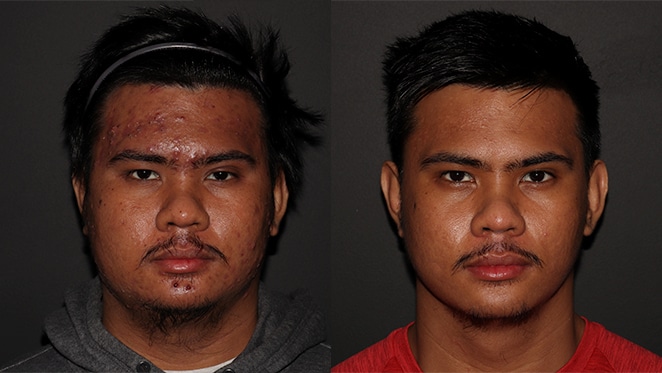
Want to see more outcomes across skin types and scar patterns? View our impressive before and after images in our photo gallery.
*Individual results may vary.